Code Arena
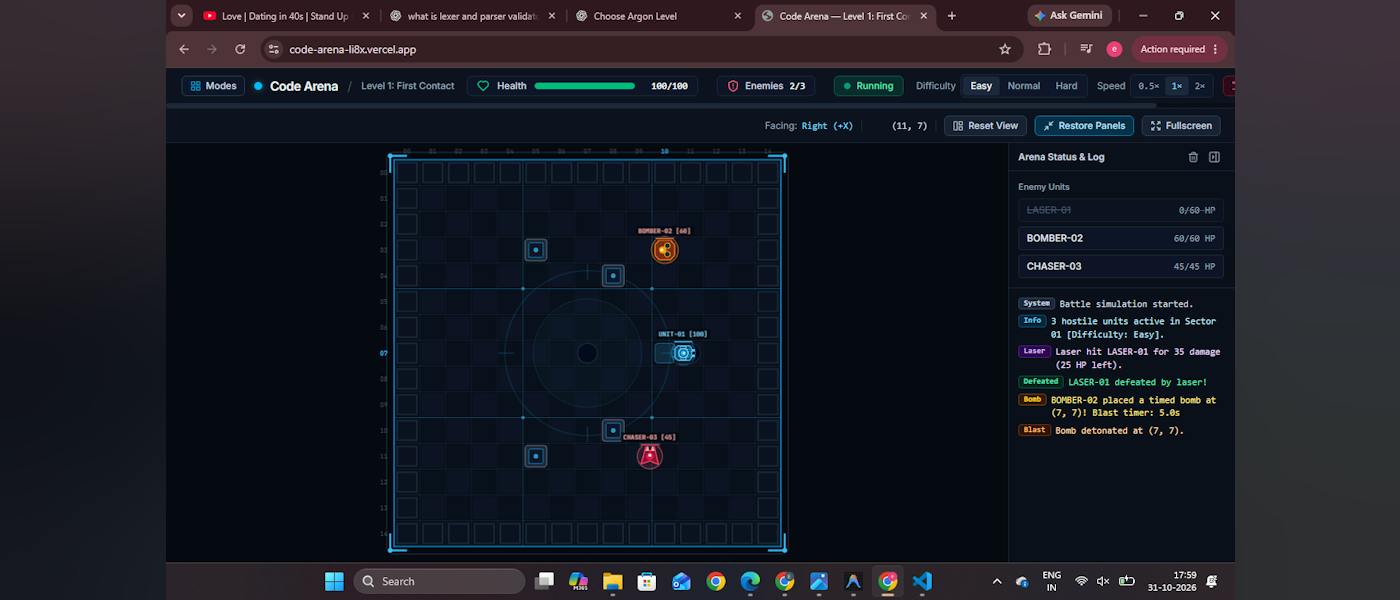
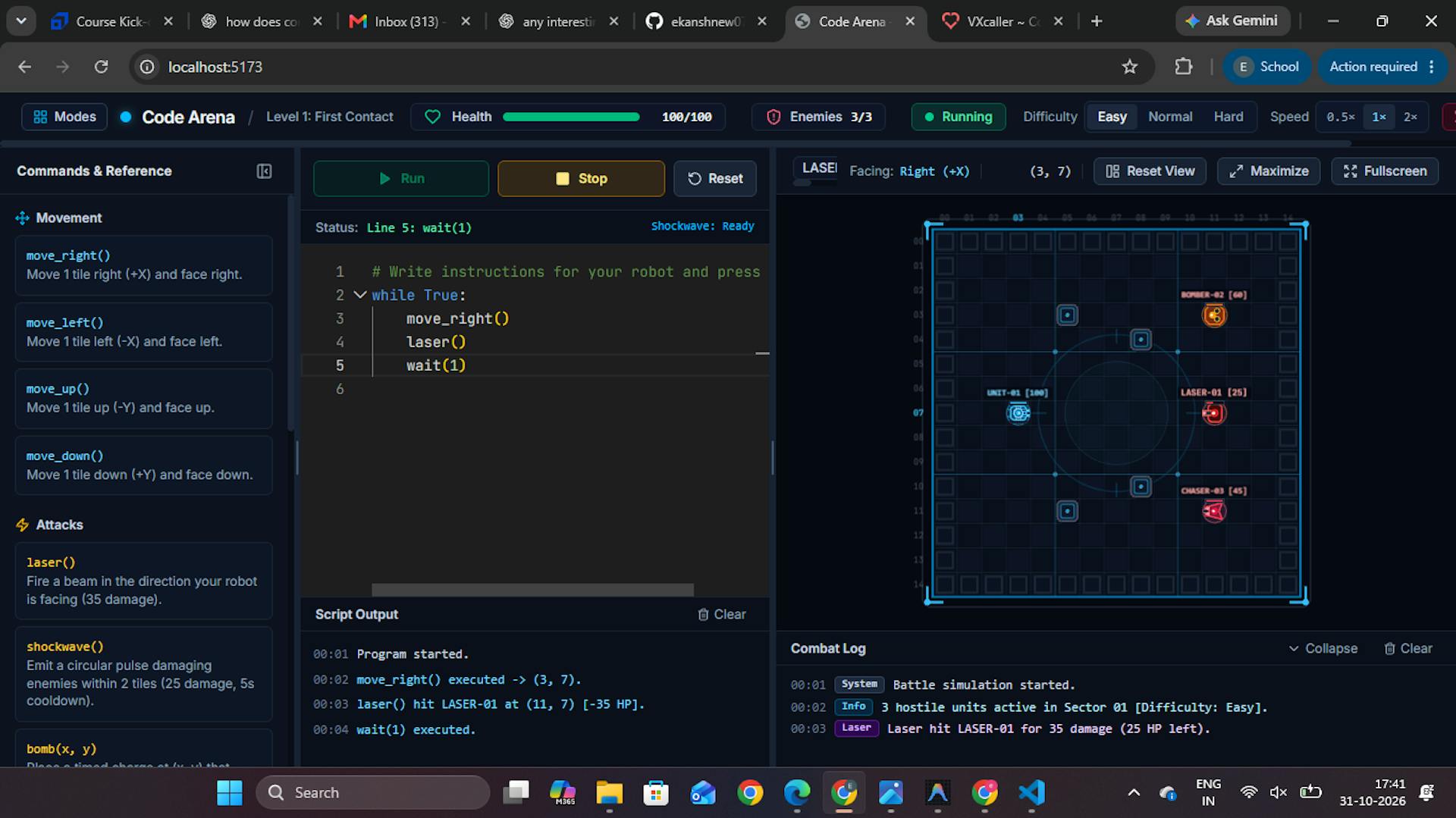
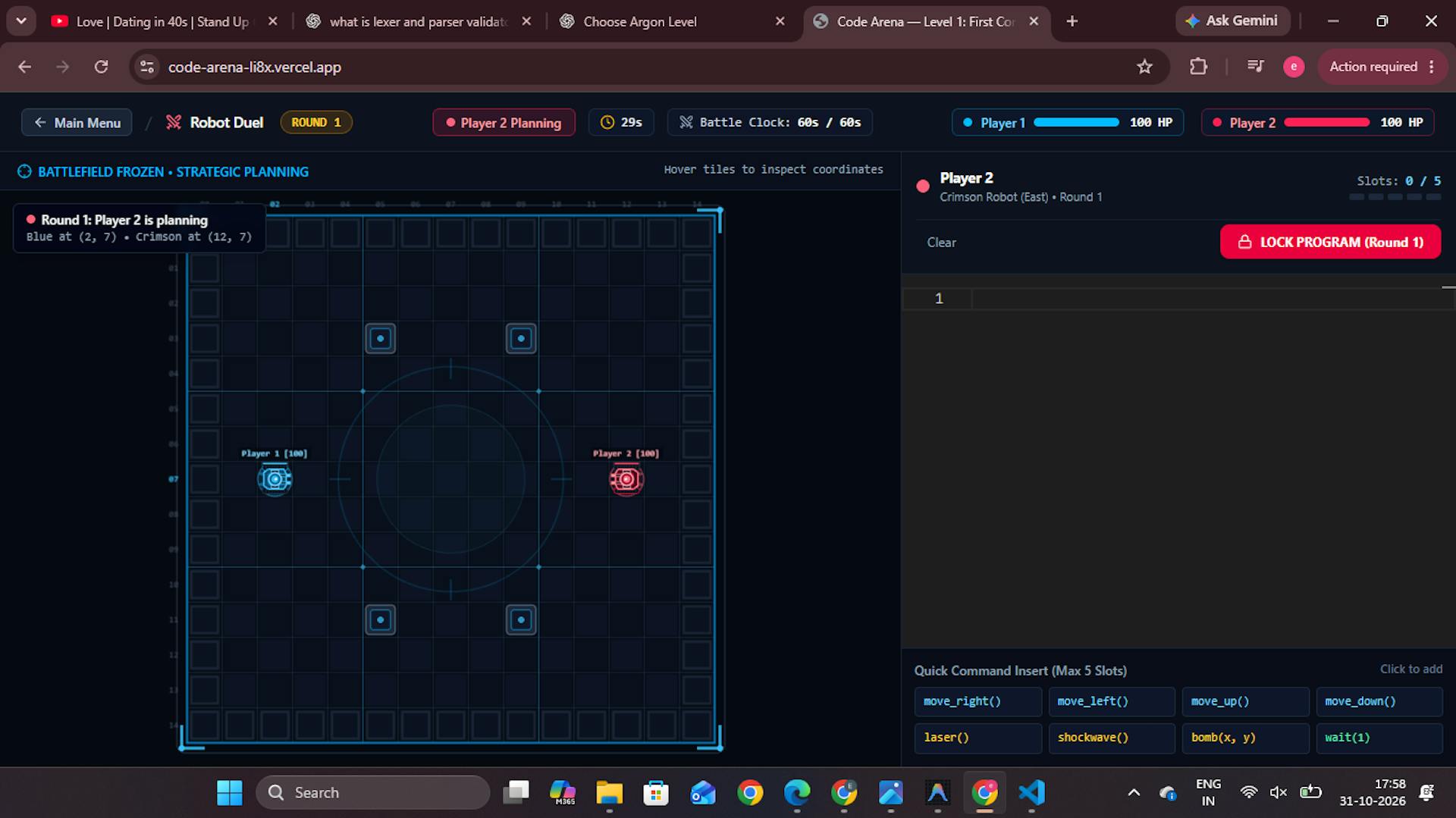
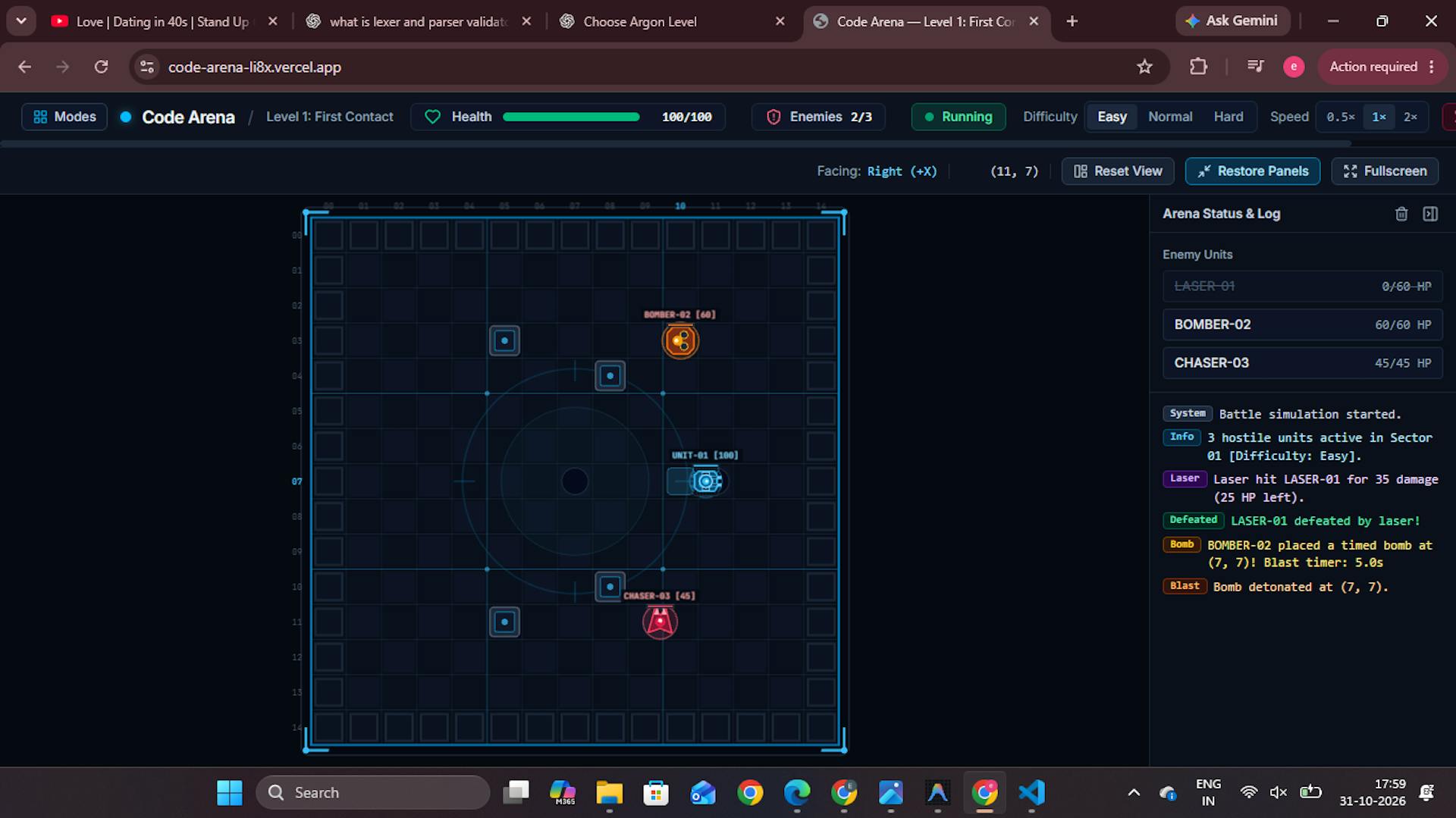
**Code Arena** is an interactive, browser-based programming game where players control robots in a battlefield by writing code instead of using traditional controls.
Players write instructions using a custom Python-like command system to move their robots, attack opponents, plant bombs, and use special abilities. The game features a single-player mode against AI-controlled enemies and a local PvP mode where two players program their robots and compete in strategic, round-based battles.
Built using React, TypeScript, Phaser 3, and Monaco Editor, Code Arena combines programming, strategy, and game mechanics to make learning and experimenting with code engaging and interactive.
The goal is to outthink your opponent, write smarter instructions, and become the ultimate champion of the arena.
How much experience does your group have? Does the project use anything (art, music, starter kits) you didn't create?
This project was developed by me with experience in programming and web development, while exploring game development and interactive applications.
The project was built using React, TypeScript, Vite, Phaser 3, Tailwind CSS, and Monaco Editor. These are existing open-source tools and libraries used to build the application. The core game concept, gameplay logic, custom command interpreter, mechanics, and overall project implementation were developed as part of this project. AI-assisted development tools were also used to help with implementation and debugging.
The project was built using React, TypeScript, Vite, Phaser 3, Tailwind CSS, and Monaco Editor. These are existing open-source tools and libraries used to build the application. The core game concept, gameplay logic, custom command interpreter, mechanics, and overall project implementation were developed as part of this project. AI-assisted development tools were also used to help with implementation and debugging.
What challenges did you encounter?
One of the biggest challenges was integrating the code editor with the Phaser game engine and making user-written commands control the robots correctly.
Developing a custom command interpreter that could safely execute instructions, handle variables and conditions, and manage execution timing was another challenge.
Implementing the PvP mode was particularly challenging because both players needed to submit programs independently, execute their instructions simultaneously, and maintain the game state across multiple rounds.
We also faced challenges with enemy behaviour, collision detection, game balancing, UI responsiveness, and debugging interactions between different parts of the application.
Overcoming these challenges helped us improve our understanding of game architecture, state management, and real-time game logic.

Made with 💖 by robots running our open-source software and GraphQL APIs.